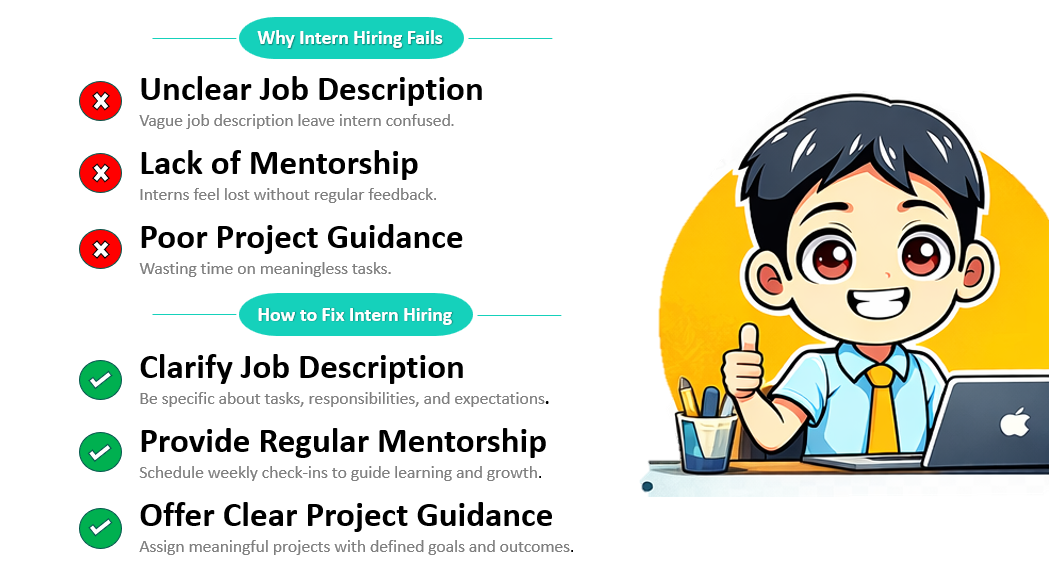
Why Most Startups Fail with Intern Hiring (And How to Fix It)
Startups love the idea of hiring interns.
Interns seem cost-effective, bring fresh enthusiasm, and feel like the perfect solution for early-stage teams with limited funds.
But in reality, most startups struggle with intern hiring.
Projects move slowly, quality suffers, founders grow frustrated, and interns feel confused or disengaged. After weeks or even after months, internship often end without meaningful outcome for either side.
The problem is not interns themselves.
The problem is how startups hire, manage, and utilize them.
The issue is not with interns; it’s about how startups handle their hiring. To fix this, we need to examine where startups go wrong and, more importantly, how they can do intern hiring the right way.
How do startups usually fail with intern hiring?
Startups struggle with intern hiring when they expect interns to work at freelancer speed, hire without clear project scope, provide minimal guidance, and treat internships as low-cost labor instead of structured learning and recruitment opportunities.
- Interns struggle when expectations are unrealistic or unclear
- Poor onboarding and Vague tasks destroy productivity
- Unpaid or underpaid internships reduce motivation and commitment
- Lack of mentorship leads to frustration and disengagement
- Internships succeed when treated as learning program and long-term hiring pathways
The 7 Major Mistakes Startup Makes when Hiring Interns
Mistake #1: Rushing the Hiring Process
What startups do “We need someone ASAP”
A job is posted on Friday.
Interviews happen on Monday.
An intern is hired by Tuesday.
Regret sets in by Thursday.
Fast hiring almost always leads to poor hiring decisions.
Why this fails
Interns are hired quickly and pushed into work while they are still learning. Placing them in high-pressure roles without support leads to inevitable mistakes – mistakes caused by inexperience, not incompetence.
Common tasks interns are often pushed into too early include:
- Shipping features quickly
- Running paid marketing campaigns
- Handling critical client work
These responsibilities require experience, speed, and decision-making – not just enthusiasm.
How to fix it
Invest few days or even weeks in proper hiring
- Prepare upfront: Clear define the job role, expectations and mentoring support
- Source candidates from multiple platforms (LinkedIn, Ditansource, university job boards)
- Review portfolios, conduct interviews, and use practical assessments
- Assign interns to supportive, learning-friendly tasks
- Reserve urgent or high-skill tasks for freelancers or full-time hires
Mistake #2: Expecting Interns to Perform Like Freelancers
What startups do
Many startups hire interns but expect them to work like freelancer speed. This creates frustration on both sides.
Why this fails
- Freelancers are paid for execution
- Interns are paid (or should be paid) for learning and contribution
Comparing interns to freelancers is unfair and unrealistic.
How to fix it
- Set learning-based expectations
- Measure improvement and progress, not speed
- Use freelancers for outcome-driven work and
- Use interns for growth-driven roles
Mistake #3: Poor Onboarding and No Clear Deliverables
What startups do
Startups hire interns and say:
“We will figure it out as we go”.
Tasks are assigned without defining success criteria, timelines, or deliverables.
Why this fails
Without clarity:
- Interns don’t know what success looks like
- Founders feel interns are unproductive
- Time is wasted in confusion
This quickly becomes overwhelming and demoralizing for interns.
How to fix it
Before hiring an intern:
- Provide a formal introduction to the team, tools, and company goals
- Clearly define the intern’s role and start with small, focused assignments
-
- Use the SMART framework (Specific, Measurable, Achievable. Relevant and Time-bound)
- Set weekly goals and clarify reporting structure
- Explain how feedback will be given and when
Structure reduces anxiety and accelerates productivity.
Mistake #4: Hiring Unpaid or Underpaid Interns
What startups do
Some startups believe unpaid internships are cost-effective.
In reality, they usually backfire.
Why this fails
- Commitment drops quickly
- Serious candidates don’t apply
- Interns treat the role casually
- Employer branding suffers long-term
By 2026, unpaid internships will become increasingly unsustainable due to ethical, legal, and market pressures.
How to fix it
- Pay interns fairly, even if modestly
- Set expectations clearly
- Treat interns as contributors, not free labor
Paid interns are more accountable and more engaged.
Mistake #5: No Mentorship or Feedback Loop
What startups do
Interns don’t fail because they lack talent.
They fail because they lack guidance.
Imagine learning to swim from someone who’s never been in water – that’s what interns face without mentorship.
Why this fails
- Founders are busy
- No one reviews intern work
- Feedback comes too late (or never)
This leads to frustration and poor outcomes.
How to fix it
- Assign one clear mentor
- Schedule weekly 1:1 check-ins
- Give early, constructive feedback
Even 2–3 hours per week of guidance can drastically improve results.
The Bigger Problem: Treating Interns as Cheap Employee
At the root of most internship failures is a one flawed mindset:
“Interns are just low-cost help.”
This mindset always guarantees failure.
Internships succeed only when they are designed as:
- Structured learning programs
- Skill-development opportunities
- Low-risk hiring pipelines for future talent
When startups shift from cost-saving to talent-building, internships become one of the most effective hiring strategies.
How Startups Can Fix Intern Hirings
After understanding the mistakes, here’s what actually works:
- Hire for Potential, Not Polish
Focus on what interns can become, not how perfect they look on paper.
Look for:
- Genuine enthusiasm for your mission
- Self-directed learning (side projects, online courses)
- Strong communication skills
- Cultural alignment
Not for:
- Perfect resumes
- Prestigious school names
- Years of experience (they’re interns!)
- Create Real Impact Opportunities
Interns perform best when their work actually matters.
- Let their work go live (shipped features, published content)
- Allow them to present outcomes
- Give ownership of results – not just tasks
- Pay Fairly
Most internship postings now include compensation details.
If you’re still offering unpaid internships in 2026, you’re signaling that you don’t value people’s time.
Fair pay increases:
- Commitment
- Accountability
- Quality of output
If you don’t value an intern’s time, they won’t value your work.
- Assign Mentors and Build Feedback Loops
Budget 2-4 hours per week of senior time for:
- Weekly 1:1 check-ins
- Feedback on work
- Career guidance
- Problem-solving support
The ROI is massive: well-mentored interns become productive faster, deliver better work, and stay longer.
- Treat internships as future hiring pipelines
Successful startups use internships to:
- Evaluate talent over time
- Reduce hiring risk
- Convert high performers into full-time roles
Internships shouldn’t be temporary labor-they should be long-term talent investments.
When internships are treated as learning experiences + hiring pipelines, startups stop struggling – and start building strong, loyal teams.
2. Interns’ vs Freelancers: Know When to Choose Each
A key reason startup fail with intern hiring is choosing interns when they actually need freelancers.
Use interns when:
- The work is long-term
- Learning is acceptable
- You want to build a future hiring pipeline
Use freelancers when:
- Speed is critical
- Advanced or specialized skills are required
- Outcomes matter more than learning
Choosing the wrong type of talent leads to poor results – no matter how good the person is.
Key Takeaway for Founders
Startups fail with intern hiring not because interns don’t work – but because internships are poorly designed.
They fail when expectations are unclear, support is missing, and the hiring decision are rushed.
When startups design internships with structure, mentorship, and fair pay, interns become one of the most cost-effective ways to build future talent.
The real question isn’t whether interns work or not.
The real question is whether your startup is ready to hire interns the right way.